

Introduction
Welcome back to another ADF blog, where we keep digital forensic professionals up to speed on all things ADF related. This week, we will explore the impact of the Landeck ruling and how it affects digital forensic investigations. For those who missed my recent webinar on this topic, it is available here.
Understanding the Landeck Ruling: A Game Changer for Digital Investigations
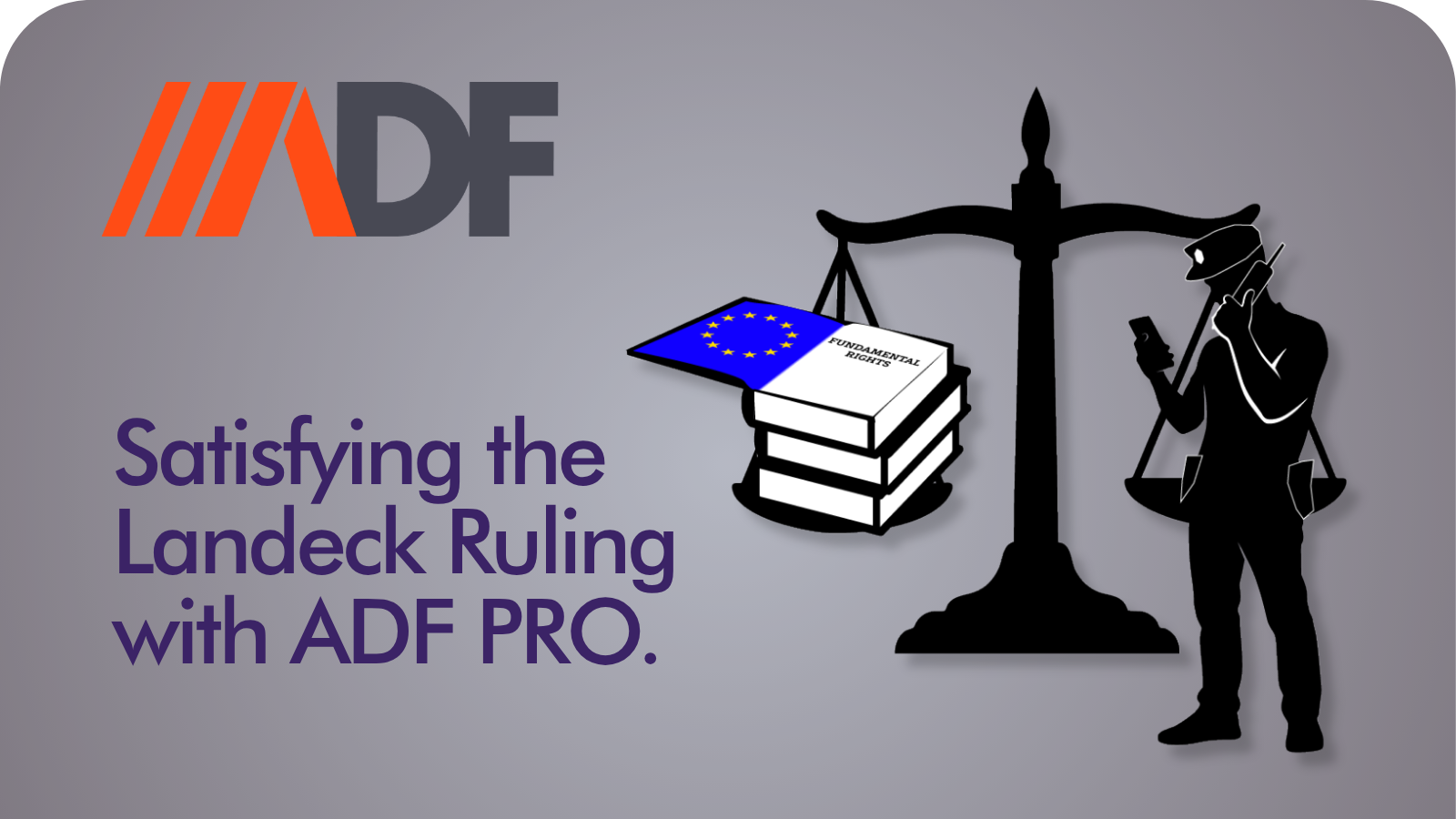
So, why is the Landeck ruling important, and how does it affect digital forensic investigations? The ruling emerged from a legal challenge in 2021, heard by the Court of Justice of the European Union (CJEU). It established that authorities cannot access and examine the full contents of a mobile phone without proper legal authorization and safeguards. Access to digital data must be lawful, proportionate, and limited to what is necessary for the investigation.
From Collection to Compliance: Adapting to Legal Standards in Forensic Work
This ruling represents a significant shift in the landscape of digital forensic investigations. It stresses the distinction between the ability to acquire digital data and the legal justification required to examine all of that data. Historically, digital forensic workflows often involved comprehensive device acquisitions, followed by broad reviews. The Landeck ruling reinforces the principle of proportionality, requiring investigators to define the scope of an examination before initiating data reviews.
Shifting Paradigms: Toward Targeted Data Collection in Forensic Investigations
So, what does this mean for digital forensic investigations? It indicates a fundamental shift away from the “collect everything…just in case!” mentality toward a more targeted approach. Investigators are now expected to consider relevant time periods, individuals, communication platforms, and data types before analyzing extracted data.
Effective Filtering: Techniques for Focused and Defensible Investigations
Filtering techniques such as keyword searches, date range filtering, and application-based filtering are becoming crucial—not just for efficiency, but for defensibility. The methodology used to locate evidence, including search terms and filtering decisions, must be documented and justified as part of the investigation process. This approach is essential in ensuring compliance with the Landeck ruling.
Minimizing Collateral Intrusion: Handling Personal Data with Care
Furthermore, the ruling emphasizes the importance of appropriately handling non-relevant personal data, especially in mobile device investigations, where vast amounts of personal information are present. Investigators will need to demonstrate that unrelated personal data was not unnecessarily reviewed and that examination methods were proportionate. Thus, digital forensic reporting is increasingly focusing on scope, filtering methods, and examination methodology alongside the evidence found.
Introducing ADF PRO: A Solution for Compliant and Targeted Investigations
How can ADF help satisfy the Landeck ruling while balancing privacy and investigational needs? With ADF PRO, we enable the creation of structured Search Profiles that allow investigators to collect only the data relevant to their investigations.
Search Profiles: The Key to Efficient and Relevant Data Collection
Our Search Profile functionality combines artifact collection, file collection, and keyword searches into a predefined investigative framework, allowing investigators to determine what they need before data collection, rather than sifting through everything later. These profiles can be customized based on the investigation type—focused on communications, financial activity, internet usage, or specific file types.
Empowering Investigators: Balancing Privacy and Investigational Needs
What if an investigator needs to share a profile with another team or department? No worries! ADF PRO allows sharing of Search Profiles across investigations and among investigators, which helps ensure consistency, proportionally, and legal defensibility in investigations.
By empowering investigators to focus on relevant data, ADF PRO addresses concerns related to collateral intrusion and the collection of unrelated personal data, particularly important in mobile device investigations.
Conclusion: A Transformative Shift in Digital Forensics
In summary, the Landeck ruling signifies a broader trend in digital forensics toward structured, documented, and proportionate examination of relevant data. For digital forensic practitioners, this transformation underscores the importance of investigation methodology, documentation, and justification of scope, making them as crucial as the technical tools used to extract and analyze digital evidence.
Interested to know more! Get in touch with us here at ADF for a demo or check out our webinar.
Comments are closed